

I'm just back from four days at Sibos 2026 in Miami, the annual gathering of banks, market infrastructures, and the firms that serve them. This year's theme was "Digital finance for AI-driven economies," and AI was on every agenda. Swift CEO Javier Pérez-Tasso and Citi's Jane Fraser set the tone in the opening plenary with a phrase: the "shock velocity" of change.
The week moved at that speed. But the closer I listened in the rooms where operators run the money, the more each AI conversation turned into a data conversation. That pattern matches what we hear from customers and partners, and it runs through every part of the story below.
The industry is compressing time
Much of Sibos was about speed, and Pérez-Tasso covered it on two tracks. On new infrastructure, Swift's blockchain-based ledger is now live, with at least 19 banks expected to use it across five major currencies by the end of 2026 for always-on payments using tokenized deposits.
On existing rails, half of all payments on Swift now reach the beneficiary bank in under 40 seconds, "faster than you can brush your teeth." The Swift Payments Scheme for consumer payments is showing 37 seconds from Australia to India, 32 seconds from China to Australia, and 15 seconds from Turkey to the US, account to account and increasingly account to wallet (The Fintech Times). Citi went live on the scheme across multiple markets, and Pérez-Tasso positioned it as the new normal for international consumer payments.

Securities are on the same path. The US moved to T+1 settlement in 2024, Europe and the UK follow in 2027, and T0 is the direction of travel.
Generative AI adds its own expectation of speed. When a model can draft, summarize, or classify in seconds, leaders naturally ask why operations still take days. Shorter windows leave less time for people to catch and fix exceptions by hand, so automation becomes the way to keep pace.
But in a regulated industry, faster only works if the inputs can be trusted.
AI can only reliably act on what it has been fed
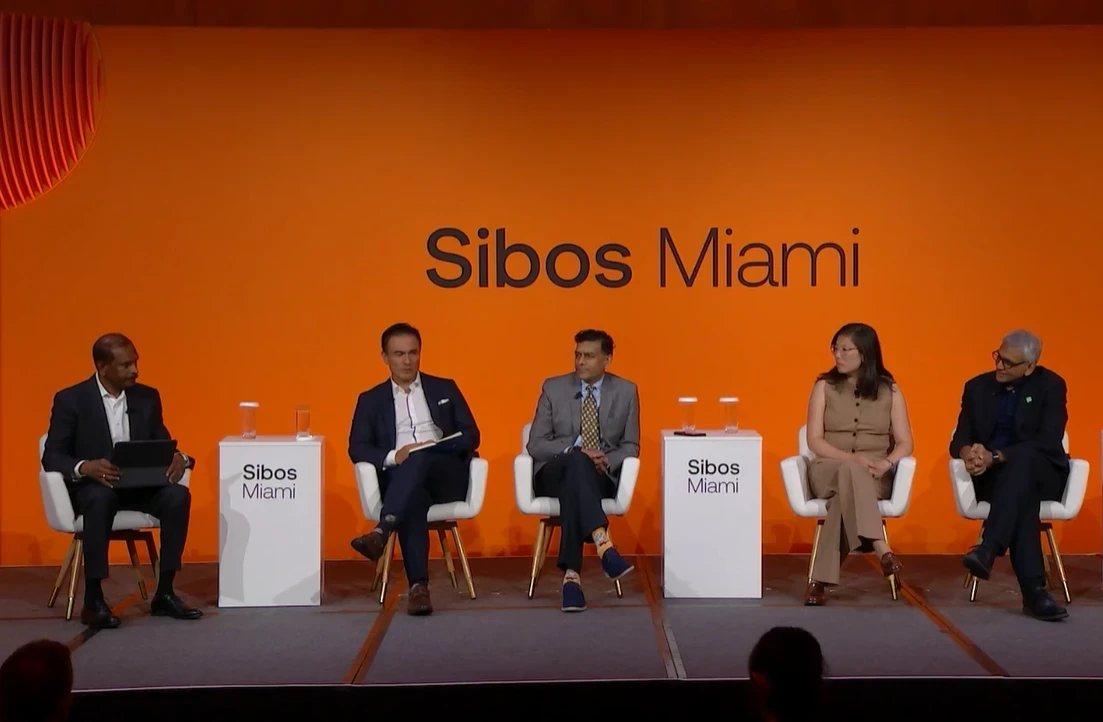
Operators said this plainly. On the Agentic Capital Markets panel, Manoj Bohra, State Street's data and AI executive, was asked about the biggest failure mode for AI programs. The answer wasn't the model or the use case. It was the data: Do we have the right data? Do we have a trusted environment? Can it be used across the full flow?
Gloria Lio, DTCC Head of Enterprise Services, made the same point from the center of market infrastructure. The foundation for an AI world is investment in foundational data capabilities and their governance, and firms are at very different levels of maturity.
Published research points the same way. In Grant Thornton's 2026 Banking Insights AI Impact Survey, half of banking executives said governance and compliance were already limiting AI performance, yet only 18% were confident they could pass an independent audit of their AI controls (as cited by Databricks). The pressure to move faster is real. So is the limit on how fast AI can safely go on data no one can explain.
Speed exposes data gaps faster
Compressing timelines can create new pressure points of their own, but it also exposes the data problems that were already there, and much faster. Settlement is a clear example. On the "Closing the Gap" panel, the issues that surface as the window shrinks were mismatched identifiers across markets, blind spots at the collateral manager and lending agent, and information gaps across multiple intermediaries. Even at "98% efficiency," the stubborn 2% still takes real time to resolve, and the shorter the window, the less time there is to find it. The panel's answers started with the data itself: standardize the data model, agree on common transaction identifiers, and give clients real visibility into where a trade actually is in the chain.

Payments told a similar story. Even as payments cross the Swift network in seconds, Swift's figures show that 80% of a transaction's average journey is spent in the "last mile," between arriving at the beneficiary bank and being credited to the end account. The remaining friction sits in the systems and processes around the network. Sibos also treated ISO 20022 as an unfinished journey, and Swift's own session noted that persistent data quality challenges continue to limit the value of structured data. That session focused on using AI to help structure payment data. AI can help repair the foundation, but someone still has to know what the data means and where it came from.
"Human in the loop" is becoming "human on the hook"
If automation is how firms keep pace, the next question is who is accountable when it acts. As agents take on real work, the conversation moved from whether an agent can act to the controls around it. Panelists kept returning to three requirements: a clear understanding of the authority the agent has been given, controls to detect when it deviates from its objective, and a way to revert when it does.
BMO's advice on where to start: pick places where you can measure impact, control the process, and reverse it. Citi's Jane Fraser described the goal as a control framework so agents don't "run amok."
None of that works without data you can explain. You cannot prove an agent stayed inside its authority, or reconstruct why it made a call, if you can't trace the data and logic underneath the decision. In a regulated environment, explainability is what makes faster automation acceptable at all.

Built for a slower world, judged on trust
Tracing that data is harder than it sounds. The IMF's First Deputy put the structural challenge simply: today's payment systems were not built for AI. Programmability only goes so far; the harder work is re-engineering toward something more digital and interoperable without sacrificing stability. Much of the knowledge needed to do that sits in systems and code that were never designed to hand it over.

U.S. Bank Chairman and CEO Gunjan Kedia explained why this matters to customers. For earlier generations, the bank was at the front and the payment happened behind it. For younger customers that has flipped: the payment is the first interaction, and the bank sits behind it.
She described AI as "transformative, divisive, and very fast," and said it raises the bar on institutions to show up as trusted entities. As automation speeds up and the interface recedes, trust is what customers actually experience, and it has to rest on data the institution can stand behind.

What the ambition actually rests on
Across sessions, each AI ambition depended on a data capability.
| The ambition on stage | What operators said it rests on |
|---|---|
| Always-on and instant payments | Structured, high-quality payment data that can be prepared correctly at the outset |
| Faster settlement (T+1 globally, toward T0) | Common identifiers and a standardized data model across custodians, markets, and intermediaries |
| Agentic front-office and operations workflows | A trusted data foundation and a control plane: authority limits, deviation controls, reversibility |
| Operating-model transformation | Data architecture and ontology, "a deep layer of foundation and understanding" |
| Compliance at AI speed | Data that is explainable and auditable in a regulated environment |
My takeaway
The demand for speed will keep rising, and AI will be a big part of how firms meet it. But in a regulated industry, AI can only move as fast as the data underneath it can be trusted and explained.
The firms that pull ahead won't be the ones with the most agents. They will be the ones that treat trusted, explainable data as a standing capability, not a one-time cleanup before the next initiative. That is the problem we focus on at Zengines.
If AI readiness is on your 2027 roadmap, start with the data it will stand on. See what AI-ready data looks like →

Frequently asked questions
What was the main theme of Sibos 2026?
The official theme was "Digital finance for AI-driven economies." On the surface the week was about AI and agents; underneath, nearly every session came back to the data foundation AI depends on.
What does "AI-ready data" mean for a financial institution?
Data that is both trusted (validated and reconciled) and explainable (traceable to its source and logic), so AI and agents can act on it safely in a regulated environment.
Why does faster settlement raise data questions?
A shorter settlement window leaves less time to catch and fix errors by hand. That pushes firms toward automation and exposes mismatched identifiers, blind spots, and nonstandard data models across the chain.